What Is Generative AI? Explained Simply With Real-Life Examples.

Sourav Mahahjan
Dec 5, 2025
Generative AI is one of the fastest-growing and exciting technologies in the global marketplace. Whether you are using ChatGPT for drafting emails, Midjourney for creating images, or using AI tools for summarising documents, you are already working with generative AI. But what does this Generative AI technology actually do? And why is everyone talking about it?
In simple terms. Generative AI (GenAI) refers to computer systems that can produce new content, such as images, text, music, videos, designs, code, and human-like conversations. In place of just analysing the information, in the case of traditional AI, generative AI actually creates something new.
It is an AI that not only follows instructions but also generates new content.
What is Generative AI? (Simple Explanation)
Generative AI is a type of artificial intelligence that uses advanced algorithms, huge language models (LLMs) and deep learning to create new content based on the patterns it has learned.
If you ask generative AI to create a story, it makes one.
If you ask generative AI to design a logo, it provides a unique picture.
In case you demand a summary of a long article, it can be rewritten neatly again.
In simple terms:
Generative AI = Learn Patterns → Understand Context → Create New Output
When compared to traditional AI, which only classifies, predicts, or labels data, generative AI can produce\ original and creative content that almost looks like human-made itan.
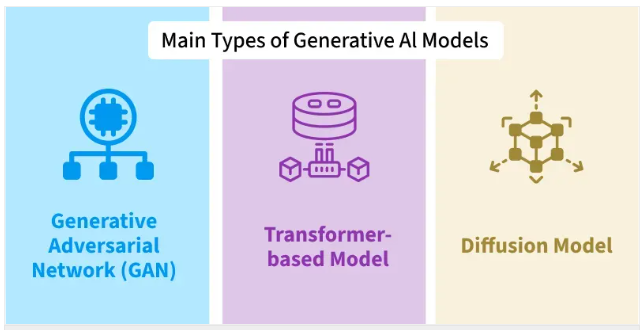
How does Generative AI work? (Explained in Simple words)
Generative AI is trained on large datasets, such as articles, images, books, code, videos, and more. During the training process, generative AI learns:
- Language patterns
- Visual patterns
- Logical connections
- Context and meaning
- How humans write, talk, create, or draw
As it is trained, it uses the knowledge it has acquired to produce new outputs based on prompts and instructions.
Consider it like this:
If you read thousands of recipes, then you can make your own recipe. Generative AI works similarly. It learns from a massive number of datasets and then creates new content that was not present before.
Why is generative AI important?
Generative AI is becoming the foundation of the modern digital transformation as it offers
· Speed: Makes content instantly.
· Accuracy: Analyses the context better than the previous version of AI.
· Creativity: Generates fresh ideas.
· Automation: Reduces the routine work and saves time.
· Scalability: Useful in any industry
From writing for exams to helping doctors, Generative AI is quickly emerging as an essential part of daily life.

Real-Life Examples of Generative AI (Easy to Understand)
Below are some of the most relatable and real-world examples of generative AI usage
1. Writing and Content Creation
Various tools like Gemini, ChatGPT, and Jasper AI help the users:
· Write blogs, essays, reports, captions
· Generate ideas and outlines
· Proofread or rewrite text
· Translate content
Example
A blogger types: “Write a 500-word blog introduction on digital marketing.”
Then, generative AI generates a complete blog introduction in a few seconds.
Therefore, AI tools help save hours of manual work and improve creativity.
2. Image Generation and Graphic Design
Generative AI tools can provide stunning logos, images and illustrations from a simple description.
Some of the popular tools are:
· Midjourney
· DALL·E
· Adobe Firefly
· Stable Diffusion
Example
You type: “Make a futuristic cyberpunk city at night with neon lights”
In a few seconds, AI generates multiple high-quality pictures and images.
Designers make use of this high-speed creativity and rapid prototyping capabilities.
3. Animation and video creation
AI-based tools such as Synthesia, Runway ML, and Pika Labs can create videos, AI avatars and animations.
Example
Business organisations can use AI to create training videos without the need for human actors. The user can simply provide the script, select the avatar, and the generative AI creates full videos.
This is a very powerful and essential tool for marketers, educators, businesses, and influencers.
4. Audio and music creation
Various generative AI tools, such as AIVA, Suno, and Stable Audio, can help create sound effects, music tracks, and even full songs.
Example
A content creator types: “Create upbeat background music for a travel vlog.”
AI creates complete, ready-to-use tracks.
Musicians make use of AI to experiment with different melodies and create new variations.
5. Learning and education
Teachers and students use generative AI for:
· Homework help
· Explanation of concepts
· Summaries of long texts
· Math problem-solving
· Language learning
Example
When a student asks, “Explain photosynthesis in simple words with an example.”
AI generates a smooth and easy explanation”.
Teachers can make use of AI to create quizzes. Worksheets and class materials
6. Business Automation and Customer Support
The business organisation makes use of generative AI for:
· Email automation
· Customer support chatbots
· Report generation
· Market analysis
· Proposal writing
Example
Banks make use of generative AI to produce personalised financial recommendations. Different e-commerce platforms use AI to manage customer queries 24/7.
This helps enhance efficiency and reduce operational costs.
7. Programming and Software
Developers make different types of Generative AI tools, such as:
· GitHub Copilot
· Tabnine
· Codeium
These tools are invaluable for improving writing and debugging code very quickly.
Example
A developer asks:
“Write a Python function to sort a list of dictionaries by age.”
The AI writes the complete code instantly.
The help accelerates the development process and reduces repetitive tasks.
8. Medicine and healthcare
Generative AI supports
· Medical report summarisation
· Drug discovery simulations
· Diagnostic predictions
· Virtual health assistants
Example
AI can analyse patients’ symptoms and suggest possible outcomes, helping doctors make quick decisions.
Pharmaceutical companies use AI to develop new compounds and raw materials for medicines.
Benefits of generative AI
Generative AI brings many different types of benefits to businesses and users
· Saves Time
· Boosts creativity
· Improves productivity
· Enhances personalisation
· Easily accessible to a large number of people
Limitations and challenges of Generative AI
Although AI is mighty in nature, it has its own limitations
· It may produce errors or misinformation
· It relies heavily on training data quality
· It may sometimes sound overly confident
· Overuse can reduce creativity in humans
· Ethical concerns such as deepfakes and data privacy
Evaluating these limitations is crucial to enabling responsible use of AI.
The Future of Generative AI: What’s Coming Next
Generative AI will continue to grow in the coming years, and therefore, in the future, it can
· Fully AI-generated movies
· AI-powered doctors and legal assistants
· Hyper-personalised education for every student
· Real-time virtual worlds created by AI
· AI agents that can work independently
Final Thoughts
Generative AI is changing the world in different ways that seemed impossible a few years back, from generating images and documents to automating business tasks, analysing data, and helping in healthcare. Generative AI has emerged as a powerful tool for everyone. One of the most exciting parts of Generative AI is that you don’t need to have technical skills to use it. Only with the right prompts can anyone create high-quality professional content and images. Therefore, generative AI is not just a trend but the future of productivity, innovations, and creativity.