Important Parts of A Common Research Paper

Sourav Mahahjan
Jan 2, 2026
What is a research paper?
A research paper is an essay that helps demonstrate a student's various learning and understanding after thoroughly exploring the research topic. The research paper includes various types of information, such as sources such as books, the internet, interviews, articles, and blogs. While writing a research paper, the researcher can also use their thoughts, ideas, knowledge, creativity and opinions. The essential requirement for writing a high-quality research study is to include more than 75% of your own words on the research topic. The research paper can also be described as a type of academic writing that helps review, provide descriptions, and justify various independent research topics. Research papers are similar to educational essays submitted in schools and colleges. However, they are longer, more designed, and more detailed. The writing of research papers is beneficial for students as it helps increase the writer's writing skills. Moreover, writing research papers is also considered helpful as it helps increase the students' research-conducting skills. The students conducting research work are required to demonstrate a strong knowledge regarding the research topics, using different types of sources of information and providing an original contribution to the research topic.
Essential Parts of a Common Research Paper: A Complete Student-Friendly Guide
Preparing a research paper is an overwhelming task, especially for students in universities, PhD scholars, and new researchers. Having a clear understanding of the essential parts of the research study results in a more structured, manageable, and logical process. Any high-quality academic research paper follows a structured framework that helps examiners, readers, and reviewers quickly understand the method, purpose, and significance of the study.
The following blog breaks down every component of the research paper practically and straightforwardly. Whether you are preparing for a final year project, dissertation, or journal article, the following blog will help you write with confidence.
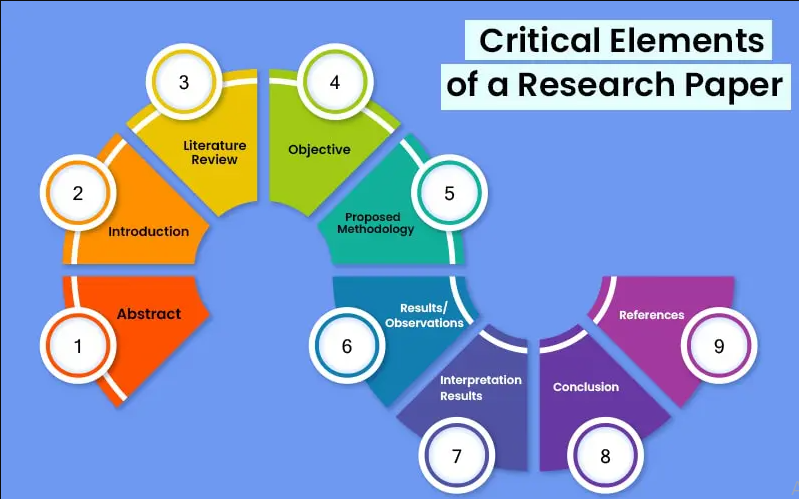
1. Abstract: The research snapshot
The abstract is the first part of the research paper; however, it is generally at the end of the research paper. It provides a well-designed summary of the entire research paper, helping the readers to decide the relevance of the research study very quickly.
A well-structured and strong Abstract consists of
- The research problem or purpose
- The methodology used
- Key findings or results
- The main conclusion or implication
In the majority of cases, the abstract consists of 150-250 words. Abstracts are generally indexed in various academic databases with the help of relevant keywords, enhancing the searchability and visibility of the research study.
Pro Tip: Always write the abstract objectively and clearly; do not use abbreviations, citations, or extensive technical details.
2. Introduction: Setting the research context
The introduction provides a strong base for the research study. It elaborates on the significance of the research study and the aims and gaps it addresses. The section then gradually moves from board discussion of the research topic to the problems of the research study.
A well-structured introduction includes
- Background and context of the study
- Statement of the research problem
- Research significance and justification
- Brief mention of objectives or research questions
3. Literature Review- Making the theoretical foundation
The literature review is one of the most essential elements of any research study. It showcases the understanding of the existing literature and places the research study in the larger academic conversations.
The primary purposes of the Literature review are
- Summarising relevant theories, models, and studies
- Identifying trends, patterns, and debates
- Highlighting gaps or limitations in previous research
- Justifying the need for the current study
Pro Tip: In place of highlighting the studies, it is essential to focus on synthesising and critically analysing the studies. The section provides the backbone for the postgraduate dissertations and other doctoral research.
4. Objectives of the research study: Defining the direction of the research
Research objectives are very significant as they clearly state the aim of the research study. They provide the roadmap for the research paper, maintaining coherence and focus.
Objectives of the research paper include
- Clear and specific
- Logically derived from the research problem
- Achievable within the study scope
A well-defined research objective helps in aligning the analysis, methodology and the conclusions. In the majority of the research papers, the objectives of the study are mainly included in bullet points for enhanced clarity.
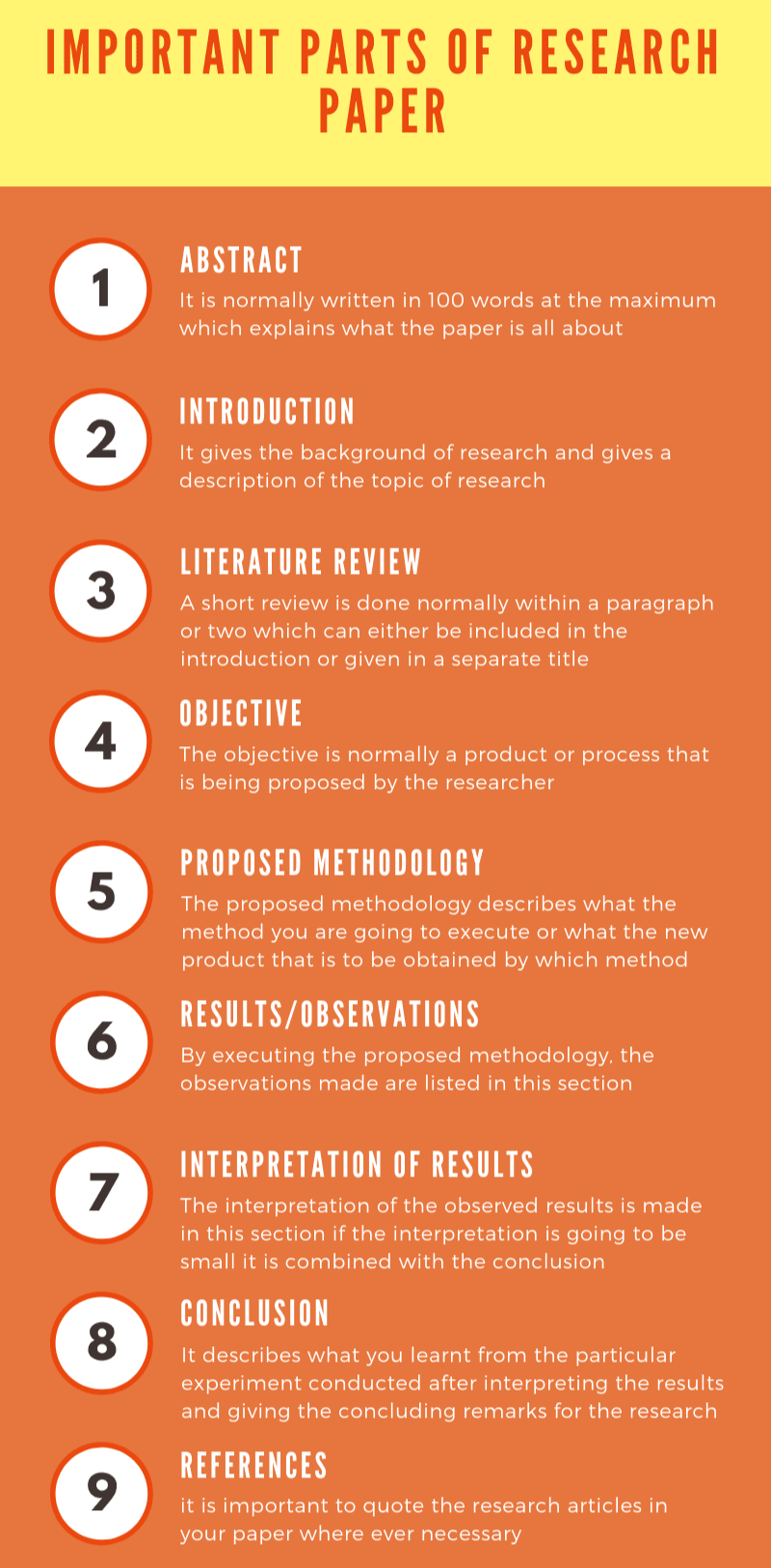
5. Proposed Methodology- Explaining the methods of completing the research study
The methodology part of the research study explains how the research study is executed and designed. This is very important for enhancing the credibility and reproducibility of the research study.
The methodology section includes
- Research design (qualitative, quantitative, or mixed methods)
- Data sources and sampling techniques
- Data collection tools (surveys, interviews, experiments)
- Data analysis methods
- Ethical considerations
The methodology section ensures the readers that the approach of the research study is reliable, systematic, and appropriate for answering the research questions.
6. Observations and Results- Presenting the findings of the study.
The observation or results section highlights the findings of the research study without any interpretation. The primary focus is on objectivity, accuracy, and clarity.
Some of the significant features of this section are
- Use of tables, charts, and figures
- Transparent reporting of statistical or thematic outcomes
- Alignment with research objectives
It is important to note that it should not include a discussion regarding why the results happened. This is done in the interpretation section of the research study. Including properly labelled visuals helps in improving the academic professionalism and readability.
7. Interpretation of the results- gaining insight from data
The section helps in explaining the reasons responsible for the result. The findings of the research study are discussed in relation to research objectives, questions, and existing literature.
The interpretation section generally includes
- Comparing findings with previous studies
- Explaining unexpected or significant results
- Discussing theoretical and practical implications
This section is considered very important in showcasing your critical thinking abilities. Robust interpretations highlight academic maturity and originality.
8. Conclusion: Summarising the key highlights
The conclusion helps in providing an impactful and logical closure to the research paper. It helps in summarising the main findings of the research study and also highlights the importance of the research study.
A well-structured conclusion includes
- Brief recap of objectives and key results
- Overall contribution of the research
- Practical or theoretical implications
- Limitations and future research directions
It is essential to avoid introducing new references or data in the conclusion section. The conclusion should focus on synthesis, clarity, and relevance.
9. Reference- Highlighting the academic sources
The reference section contains all the academic sources cited in the research paper. It showcases academic integrity and helps the readers in exploring and verifying the prior research.
Important considerations
- Follow a consistent citation style (APA, Harvard, MLA, Chicago)
- Ensure all in-text citations appear in the reference list
- Use credible and recent academic sources
Academic referencing not only helps in reducing plagiarism but also helps in strengthening the scholarly significance of the research study.
Final Thoughts
Having a clear understanding of the different parts of the research study helps in transforming the academic writing into a structured process. Each section of the research paper is assigned a specific role, and all these sections work together to deliver a systematic research study. Whether you are a researcher, postgraduate student, or academic professional, mastering the research study helps in improving grades, publication success, clarity, and increasing academic confidence. A well-structured research paper is more than meeting the educational requirements; it also includes communicating the knowledge effectively to the world.