How to Write High-Scoring Assignments for University: The Complete Guide

Sourav Mahahjan
Dec 20, 2025
Scoring good marks in university examinations is not a matter of luck or brilliance at the last minute. It’s more about structure, strategy, clarity, and research. No matter whether you are a postgraduate or a graduate student, gaining expertise in assignment writing can significantly improve your academic reputation, confidence and grades.
The following will provide all the information you will be required to master assignment writing, from understanding the assignment questions to submitting a plagiarism-free and polished assignment that can engage the professors.
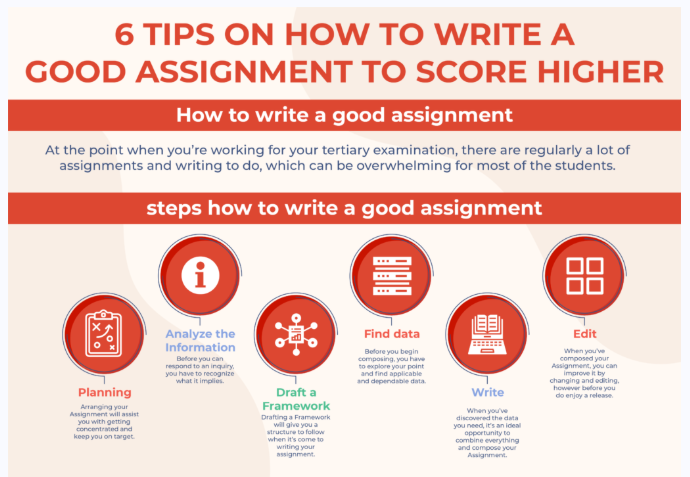
“Figure: 6 Important tips to write a high-scoring university assignment”
Understanding the Assignment Brief (Most Students Skip This)
One of the most significant reasons that results in a mark deduction is misinterpreting the assignment question.
Before you start
- Read the assignment brief at least 3 times
- Identify the task words (analyse, evaluate, compare, critically discuss)
- Note the word count, deadline, and referencing style
- Understand the assessment criteria or rubric
Tip: If the question asks for a “critical analysis”, describing the topic alone will not help you earn good marks. You will also be required to include arguments, evaluation, and evidence.
Plan before you write (Your Secret Weapon)
Planning the assignment is more important than rushing into it
Creating a simple plan
- Introduction (10%)
- Main body (70–80%)
- Conclusion (10%)
- References
Divide the main body into clear sub-headings aligned with the assignment objectives.
- Key themes
- Research questions
- Planning helps in saving time and promotes logical flow, which is supported by examiners.
Research Like a Top Student
Strong research differentiates average assignments from highly engaging works
Include strong academic sources:
- Peer-reviewed journal articles
- Academic books
- University-recommended databases (Google Scholar, JSTOR, Scopus)
- Government or institutional reports
It is essential to avoid overusing AI-generated content, Wikipedia, and blogs without adequate verification.
Important Tip: Quality is more important than Quantity. Having 10 strong sources is more important than 30 weak sources.
Write a Powerful Introduction
The introduction plays a significant role in impressing the examiner more quickly
A highly engaging and scoring introduction should include
- Introduce the topic clearly
- Explain why it matters
- Briefly outline what the assignment will cover
- State the aim or thesis statement
Avoid:
- Long background stories
- Definitions copied from dictionaries
- Writing vague statements
Master the Body: Where Marks Are Won or Lost
It is a place in which your critical thinking and analysis shine
Every paragraph in the main body should follow the following strictures
- Topic sentence – what the paragraph is about
- Evidence – theories, studies, or data
- Analysis – your interpretation
- Link – connect back to the question
Use:
- Academic tone
- Clear arguments
- Logical transitions
Important Tip: Don’t just say what to do, explain why and how
Show Critical Thinking (This Gets You Top Grades)
Universities and examiners support critical analysis more when compared to memorisation.
To highlight critical thinking
- Compare different viewpoints
- Highlight strengths and limitations of theories
- Support claims with evidence
- Avoid one-sided arguments
It is essential to include phrases also
- “However, this view is challenged by…”
- “A limitation of this approach is…”
- “In contrast, recent studies suggest…”
Use Referencing Correctly (Easy Marks!)
Improper and inconsistent referencing can result in a significant reduction in marks. The following are some of the required referencing styles.
- APA
- Harvard
- MLA
- Chicago
Include
- In-text citations are accurate
- The reference list is complete and formatted
- Sources cited in text appear in the reference list
Important Tip: Make use of different types of Zotero, EndNote, and Mendeley
Write a Strong Conclusion (Don’t Just Repeat)
A highly engaging and firm conclusion should include
- Summarises key arguments
- Reinforces your main findings
- Directly answers the question
- Avoids introducing new information
Consider your conclusion as the final chance of impressing the examiner; therefore, make it clear and confident.
Edit, Proofread, and Polish
Providing high-quality content will not help in gaining good marks without proper presentation.
Before submission:
- Check grammar and spelling
- Improve sentence clarity
- Remove repetition
- Ensure academic tone
It is essential to read the assignment aloud. It helps in identifying the errors very quickly.
Important Tip: Various tools, such as Grammarly, can help, although it is essential not to trust them blindly.
Avoid Plagiarism at All Costs
Plagiarism can result in
- Grade penalties
- Assignment failure
- Academic misconduct cases
Therefore, to stay safe
- Paraphrase properly
- Cite all sources
- Avoid copying AI-generated text directly
- Use plagiarism checkers responsibly
Original thinking, along with proper citation, = Academic success
Presentation Matters More Than You Think
First impressions are very important
Include:
- Correct font and size
- Proper spacing and margins
- Clear headings and sub-headings
- Professional formatting
A well-planned and clear assignment helps in showcasing the academic effort of the student.
Final Checklist Before Submission
- Answered the question fully
- Met word count (±10%)
- Followed the referencing style
- Proofread thoroughly
- Submitted on time
Never submit the assignment without reviewing the following checklist
Final Thoughts: Work smarter, not harder
Creating a high-scoring university assignment is more than just being the smartest student. It is more about being structured, consistent, and strategic. Understanding the needs of the examiners and delivering it completely and clearly will help you get good grades. Start working early, reference accurately, think critically, and polish your work. Following this guide will help you get high grades and improve your academic confidence. And if you still feel stuck, don't forget to reach out to TheAssignmentNinjas.