Best AI Tools for Checking Citations in 2026 — Ultimate Guide

Sourav Mahahjan
Jan 24, 2026
In the present age of generative AI, ensuring accuracy and credibility in content writing and research studies is more critical than ever. The AI tools at present are capable of creating text, which has significantly increased the risk of hallucinated references, fake citations, and incorrect bibliographies. No matter whether you are an academic researcher, student, content creator, or professional writer, citation accuracy becomes very significant for improving your grades, peer recognition, and trust.
However, in 2026, a new generation of AI-based citation-checking and verification tools has emerged to help ensure that references used in writing are original, properly formatted, and supported by real sources.
In this complete and detailed blog, we will discuss the best AI tools for checking citations in 2026, showcasing their strengths, and the things to be kept in mind when selecting a tool for your writing.
1. Citely- One of the Best AI citation checkers
Overview:
Citely is one of the most frequently used AI citation-checking tools that help verify academic citations and identify the sources of references in a work. It cross-references citations against major academic databases and identifies suspicious or fake references.
Key Features:
Automatic citation verification checks the authenticity of references against Google Scholar, PubMed, CrossRef, and other databases.
- AI source finder: Help in identifying the original published paper, also in complete citation or partial citations.
- Bulk processing: Helps verify the entire bibliography with fast, batch scanning.
- Multi-style export: Output cleared references in MLA, APA, Chicago, IEEE, and more.
- Real-time research assistant: Enables interactive chat to guide citation queries and fixes the errors.
Best For:
The tool is best for PhD students, academics, content teams, and editors who must verify the credibility of sources before submission and publication.
Why is it worth trying: Citely helps detect AI-generated or fabricated references, a significant concern in AI-created academic texts. This helps save the time required for manual verification.
2. Scite.ai- Smart Citation and Reliability Analyses
Overview:
Scite.ai is more than a citation checker; it’s a more in-depth citation evaluator. In place of merely verifying the presence of sources, Scite.ai helps evaluate how a paper is referenced in the literature by supporting others, contradicting, or simply mentioning work. This provides a significant insight into the reliability and reputation of the sources.
Major features:
- Smart Citation: Highlights the context of the citation, and the intent that is supporting, contradictory, or neutral.
- Visualisation of citation context: Identifies how findings are interpreted in follow-up studies.
- Support for reference checks: Helps identify problematic or retracted literature before citation.
- Plugins and Browser integration: Provides tools for Firefox, Google Chrome, and other reference managers such as Zotero.
Best for:
Academics and researchers looking to go beyond formatting and evaluate the quality of content and citations.
Why it is unique: Compared to other tools that merely indicate the existence of a citation, Scite.ai provides information about a citation's trustworthiness within its citation conversations.
3. Zotero with AI Enhancements — Best for Reference Management + Verification
Overview:
Zotero is one of the most trusted open-source reference managers. Also in 2026, it remains one of the most popular AI tools for gathering, organising, and exporting citations, now equipped with AI-powered plugins and assistants to assist with metadata extraction and suggest smart citations.
Key Features:
- Automated Metadata extraction: Helps collect complete reference details from webpages and PDFs.
- Single-click citation formatting: Consists of all the major citation styles and is automatically updated.
- Group collaboration and libraries: Help sync the collection across various projects and teams.
- AI-powered citation suggestions: The new AI plugin provides relevant sources based on the content manuscript.
Best For:
Collaborative research work, long-term projects, librarians, and people looking for complete citation management, along with checking.
Note: Zotero, by default, is not a citation checker, but when used with AI tools and companion tools such as Citely or Scite, it helps create a strong citation ecosystem.
4. QuillBot — Fast Citation Generation with AI
Overview:
Quillbot is primarily known as a writing and paraphrasing tool; however, its inbuilt citation generator supports thousands of styles and can quickly generate verified references from DOIs, URLs, and titles.
Key features:
- 1000+ citation style: It offers one of the most extensive style coverage options currently available.
- Integrated Writing support: Integrates grammar improvement, paraphrasing, and citation generation in one single window.
- Beginner-friendly and fast: Very useful for students who require citation help without a complex learning curve.
Best For:
Blog writers and students require reliable, quick citation formatting along with other writing tools.
Limitations: It lacks source verification. Therefore, it is advisable to pair it with an AI-enabled tool such as Citely for improved results.
5. Citation Verifier Tools (e.g., CiteSure) — Dedicated Validation Engines
Overview:
Various standalone tools, such as Citestore, use advanced algorithms to cross-reference citations across large volumes of academic publications and records, verifying the names of authors, DOIs, publication dates, and journal titles.
Key features:
- Metadata Verification: Helps ensure every part of the citation is correct.
- Batch processing: It helps validate larger reference lists more effectively.
- Academic integrity checks: They help identify duplicates, mismatches, and potentially broken or fabricated references.
Best for:
The tool is best for editors, quality teams, and peer reviewers who need accurate, fast citation verification without a full-scale reference manager.
Pro Tip: It’s advisable to use citation tools alongside reference managers and research tools to complete a workflow.
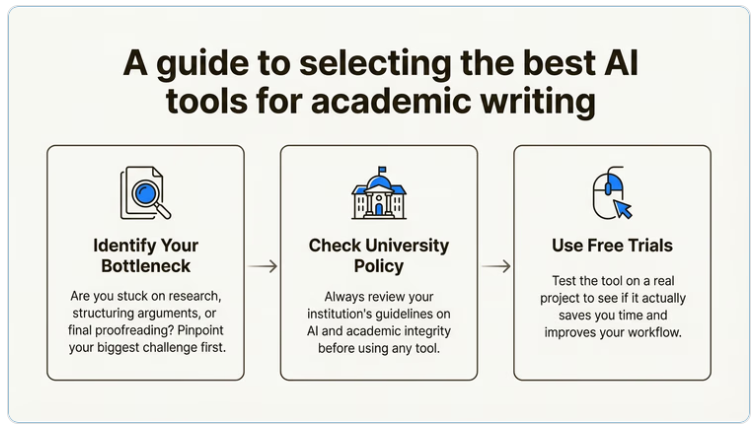
How to select the best citation Tool
Actually, there is no “one-size-fits-all” process. Therefore, the best citation workflow generally consists of tools such as
| Needs | Best Tools |
| Verify authenticity & detect fake citations | Citely, Citation Verifier |
| Evaluate citation credibility and context | Scite.ai |
| Organise references long-term | Zotero + AI plugins |
| Generate citations quickly | QuillBot |
| Deep academic research workflows | Scite.ai + Citely + Zotero |
For researchers and academics, tools such as Scite.ai and Citely offer the most effective citation-checking and verification, helping avoid invalid or fake references and improving the overall credibility of your work and content.
Conclusion
As AI increasingly influences how we research, write, and publish, the integrity of citations has become more significant. The use of AI tools not only improves workflow speed but also helps avoid common pitfalls, such as AI-generated hallucinations, outdated references, and formatting errors.
In the year 2026, whether you are preparing a thesis paper, preparing to publish a research work, or drafting an authoritative blog post, the above-mentioned tools, with help, will help you manage, check, and trust citations like a professional.
Pro tip: Pair a dedicated AI Citation tool, such as Citely, with a reference manager tool, such as Zotero, and a context analyser, such as Scite.ai, to create a workflow that is reliable, fast, and academically correct.